
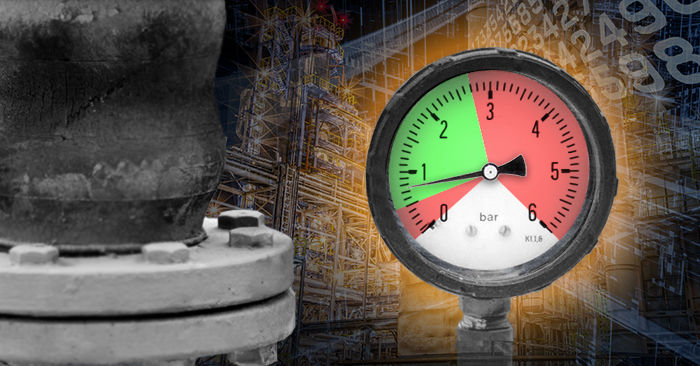
Integrity Operating Windows
Reduce Inspection Frequency, Improve ROI
With equipment failure in the US refining industry alone costing over $4 billion annually and reports indicating unplanned shutdowns costing local refineries $40 million each, the urgency of this question has never been more evident.
The key to preventing asset failure lies in accurately predicting its probability. This can be achieved with Integrity Operating Windows (IOWs). An API Recommended Practice (RP 584), IOWs allow you to incorporate an asset’s operational performance into your risk strategies for more accurate failure prediction and avoidance.
Why IOWs?
For years, attempts to monitor and anticipate corrosion rates have been compromised by outdated methodologies reliant solely on historical inspection results. These methodologies fail to consider undesired changes in variables such as feedstock quality, operating conditions, or process configuration alterations – changes that could potentially increase corrosion rates and degrade assets. Consequently, conducting external or intrusive internal inspections on pressure equipment can reveal unanticipated corrosion and sometimes unexplained damage – leading to unplanned repairs and costly turnarounds. In essence, these methodologies may fail to predict asset degradation and result in false confidence as to the actual condition of the asset. Hence, it is critical to integrate operational performance into inspection results analysis using IOW.
IOW enhances predictive accuracy by facilitating the collection, retention and analysis of asset integrity defined data from plant processes. It provides an early warning when these defined process variable boundaries are exceeded, thereby alerting owner-users to possible asset degradation due to deviations from defined parameters. For instance, knowing the threshold temperature at which corrosion begins for a degradation mechanism (such as sulphidation), one can set the upper limit alert of the Asset Integrity Management (AIM) software accordingly to indicate when the process environment enters the corrosion zone. Similarly, if a material is operating near its known upper corrosion resistance temperature limit, IOW provides data as to how long and how far the limit was exceeded. Knowing the operating conditions in which a particular asset is likely to be degraded, program limits may be configured into the AIM software to provide timely alerts when operating conditions approach hazardous levels. The benefits are essential, immediate, and self-explanatory. IOW complements a sophisticated RBI model, enhancing the understanding of AIM programs, resulting in:
- Exponentially improved ability to prevent equipment degradation
- More awareness and confidence in knowing an asset’s operating history
- Accurate assessment of current asset health based on operational performance
- Drastically reduced instances of equipment failure, unplanned repairs, and unplanned shutdowns
- Increased inspection intervals based on proven good operational history
- Improved safety for your facility and personnel
Implementing IOWs with Trusted Experts: Metegrity
Metegrity is an industry leader in asset integrity management. Our suite of inspection data management software solutions utilizes built-in RBI components and a dedicated IOW module for clients across pipelines, plants, and facilities. Our flagship product, Visions Enterprise®, creates unique risk models which assess a client’s assets, incorporates that data into a centralized database, and tailors an Asset Integrity Management program to maximize ROI. Metegrity currently protects over $550 billion in assets across 850 facilities around the world.
Contact us today to learn more about our comprehensive software solutions and start streamlining your asset management operations.