
Implementation of a Risk Based Inspection (RBI) Program
The question for asset intensive corporations now is not: “Should I implement an RBI program?”
Rather, the question becomes: “How do I go about it?”
Implementing an RBI program from scratch can indeed be daunting due to inherent challenges faced by a company. To ensure smooth implementation, organizations should consider and prepare around key factors. With careful planning, including the assistance of a professional implementation team, the organization can swiftly realize the prolonged equipment life and cost-saving benefits of RBI.
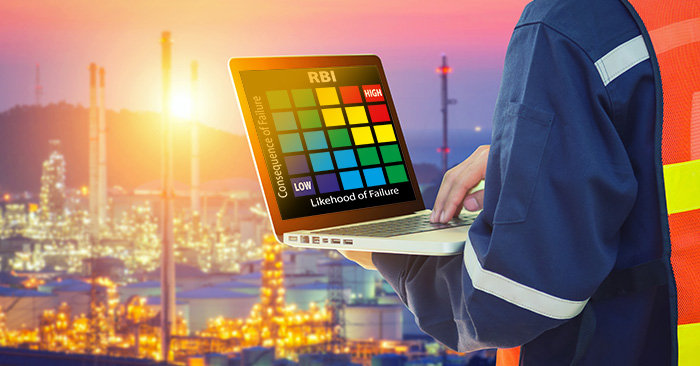
What are some of the common challenges faced when starting an RBI program from scratch? To start with, the effort required to collect and organize all the necessary data to perform an accurate assessment is significant. The extent of this effort will depend on the volume and complexity of data within the organization. Additionally, the time required for the RBI team to meet, review the data, and complete assessments should be considered. It is imperative to ensure that the team consists of qualified members with the experience to perform accurate assessments. Finally, the company must use an RBI matrix that accurately reflects the organization’s unique Probability of Failure (POF) and Consequence of Failure (COF) factors.
RBI team members from the organization will quickly recognize that the assessments require significant time and attention to detail. All team members will face challenges with time management. To expedite implementation, management should acknowledge this reality. Management should support the program by ensuring team members have the necessary time to dedicate to it and temporarily adjusting other responsibilities until the project is completed.
An organization lacking readiness due to incomplete equipment and process data will face significant hurdles in completing the RBI program successfully. Therefore, management support is critical to ensure all necessary resources are committed to the project. It is imperative that management understand the inherent risk and potential consequences of the company’s operations. A personal review of the program with the RBI lead will ensure management understands not only the challenges, but the following objectives of the RBI program:
- Improved risk management
- A collaborative approach to risk mitigation
- The application of a strategy that safeguards equipment integrity, improves reliability, and enhances availability by planning and executing required inspections
- Reduction of inspections and shutdowns, while providing longer run length without compromising safety or reliability
When putting together a team for the RBI program, it is crucial to select qualified personnel and support them with comprehensive training. RBI team members must be familiar not only with the RBI process, but also with the software employed. Upfront training for the team will ensure they are able to work together and analyze risk in a consistent manner. Team personnel must be experienced in their field of expertise to provide timely and accurate information during assessments.
Once the team is in place, preparations are complete, and management is on board, implementation can commence. A typical workflow for starting an RBI program consists of:
-
Establishing clear objectives and goals for the RBI program.
-
Forming a well-trained RBI team with defined roles and adequate skills, experience, and knowledge.
-
Identifying and validating all data sources to ensure accuracy and reliability.
-
Compiling a list of all degradation mechanisms and failure modes.
-
Selecting the most appropriate POF and COF methodology.
-
Evaluating the effectiveness of past inspections, analyzing results, and planning.
-
Selecting of the right software (taking into consideration the source of the existing data).
Selecting the right software is key to maximizing the efficacy and expediency of the program. Utilizing an RBI software that incorporates Asset Integrity Management (AIM) information, Integrity Operating Windows (IOW) data, and Corrosion Control Documents will ensure that assessment information is researched seamlessly, retained, and easily updated. Companies should research and select RBI software with wide acceptance, a proven track record, and continuing support, ensuring alignment with current industry standards.
Implementing an RBI Program with Trusted Experts
Metegrity is an industry leader in asset integrity management software which incorporates all RBI models for asset intensive industries. Our suite of inspection data management software (IDMS) modules utilizes built-in RBI capabilities for clients with pipelines, plants, and facilities. Our team of qualified experts is highly experienced in supporting the development and implementation of RBI programs for large corporations around the world. Our flagship product, Visions Enterprise®, currently protects over $550 billion in assets across 850 facilities worldwide.
Contact us today to learn more about our comprehensive software solutions and start streamlining your asset management operations.