
Why Risk Based Inspection is Essential for Industrial Asset Integrity

Risk Based Inspection (RBI) is a crucial aspect of industrial asset integrity that helps to identify and prioritize equipment and components for inspection. RBI is a proactive approach to maintenance that aims to reduce the risk of equipment failure, minimize downtime, and increase the safety and reliability of industrial assets. RBI allows companies to focus their resources on equipment that poses the greatest risk to safety, the environment, and production. By using RBI, companies can develop a cost-effective inspection program that maximizes the life of their assets.
5 Ways to Improve Your Regulatory Compliance
When it comes to the asset integrity management (AIM) of plants and facilities, it seems that everyone has a different definition of what regulatory compliance entails. With so many differing regulatory bodies across the globe (each with different requirements) it can be difficult to pinpoint exactly what steps a company needs to take to ensure that compliance will be met. Thus, it’s a challenging tenant of AIM to get right – and yet, with the risk of hefty fines in case of an audit failure, it’s also an expensive one to get wrong.
Leveraging Key Performance Indicators (KPI) for Advanced Analytics with Asset Integrity Management (AIM)
One area of increasing interest in the world of asset integrity management (AIM) for plants and facilities is that of Key Performance Indicators (KPI). Leveraged properly, KPIs can be the catalyst for future advanced analytics of your equipment data. They provide a rare window of insight into the efficacy of various elements of your inspection data management (IDMS), equipping you with the tools you need to hone and target your strategies for better asset performance, reduced inspection costs, and superior mechanical integrity.
Lower Costs, Enhance Security with Cloud-Based Asset Integrity Management (AIM)
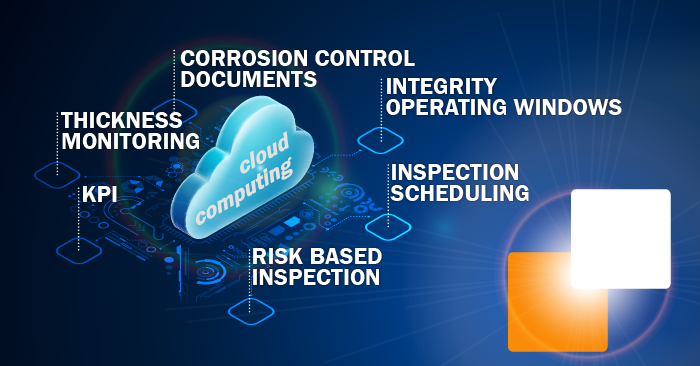
By now, the benefits of cloud computing for asset integrity management (AIM) are well known. The ability to store all asset data securely in the cloud – thereby outsourcing the complex and expensive IT support and maintenance involved in hosting it in-house – can be leveraged for tangible and immediate cost savings. However, when it comes to selecting the right software for cloud-based inspection data management, things are not quite as cut and dry.
How to Leverage AIM for Pipeline Corrosion Control
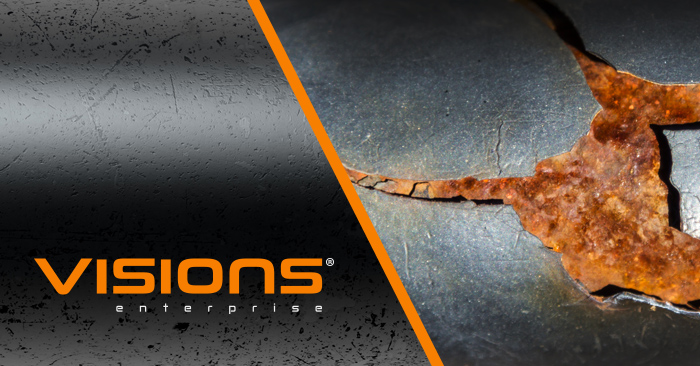
Managing pipeline corrosion can be a time-consuming guessing game – wasting money and resources looking for corrosion where it isn’t and missing corrosion where it is. A lot of it comes down to not knowing what you don’t know. For example: at any given time, how aware are you of what contaminants are in the process stream? When the stream composition changes? Are you always aware and instantly alerted when key corrosion factors in your asset change?