
Leveraging Key Performance Indicators (KPI) for Advanced Analytics with Asset Integrity Management (AIM)
One area of increasing interest in the world of asset integrity management (AIM) for plants and facilities is that of Key Performance Indicators (KPI). Leveraged properly, KPIs can be the catalyst for future advanced analytics of your equipment data. They provide a rare window of insight into the efficacy of various elements of your inspection data management (IDMS), equipping you with the tools you need to hone and target your strategies for better asset performance, reduced inspection costs, and superior mechanical integrity.
Lower Costs, Enhance Security with Cloud-Based Asset Integrity Management (AIM)
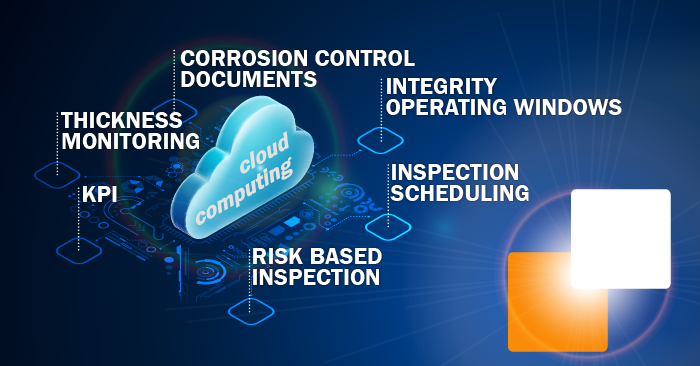
By now, the benefits of cloud computing for asset integrity management (AIM) are well known. The ability to store all asset data securely in the cloud – thereby outsourcing the complex and expensive IT support and maintenance involved in hosting it in-house – can be leveraged for tangible and immediate cost savings. However, when it comes to selecting the right software for cloud-based inspection data management, things are not quite as cut and dry.
Enhance Security in Oil & Gas Asset Integrity Management

The Industrial Internet of Things (IIoT) has transformed the landscape of Asset Integrity Management for the Oil and Gas industry. By empowering owner-operators with the ability to interconnect a vast array of physical assets on one digital platform, IIoT facilitates improved productivity, profitability, inspection scheduling, and corrosion mitigation – all while significantly reducing the likelihood of asset failure.
How to Leverage Integrity Operating Windows for Improved Corrosion Control

An API Recommended Practice (API RP 584), Integrity Operating Windows (IOW) are an essential component of any asset integrity management (AIM) system. IOWs improve predictive accuracy. They facilitate the collection, retention, and analysis of variable data – providing early warnings when a pre-defined process variable’s boundaries are exceeded. This helps to predict and prevent corrosion, increase productivity by allowing for predictive maintenance, and reduce the likelihood of asset failure.
Top Strategies to Optimize Asset Integrity Management Workflow

The key to success for any asset integrity management (AIM) program lies in the development of its workflow process. For owner operators of plants, pipelines, and facilities, efficient and seamless inspection data management is key. The more effective the workflow and its application, the more reliable the equipment – reducing the chances of costly shutdowns or unnecessary repairs.