
Enhanced Asset Integrity Performance Through Improved Data Management and RBI: A Case Study with Methanex

This case study highlights the successful implementation of Metegrity’s Visions Enterprise solution at Methanex, a global leader in methanol production. By leveraging Visions Enterprise and implementing risk based inspection practices, Methanex achieved significant improvements in asset integrity performance through enhanced data management practices and inspection strategies. This case study demonstrates how Visions Enterprise facilitated streamlined data management, risk based inspection, and improved asset integrity outcomes.
5 Ways to Improve Your Regulatory Compliance

When it comes to the asset integrity management (AIM) of plants and facilities, it seems that everyone has a different definition of what regulatory compliance entails. With so many differing regulatory bodies across the globe (each with different requirements) it can be difficult to pinpoint exactly what steps a company needs to take to ensure that compliance will be met. Thus, it’s a challenging tenant of AIM to get right – and yet, with the risk of hefty fines in case of an audit failure, it’s also an expensive one to get wrong.
Leveraging Key Performance Indicators (KPI) for Advanced Analytics with Asset Integrity Management (AIM)
One area of increasing interest in the world of asset integrity management (AIM) for plants and facilities is that of Key Performance Indicators (KPI). Leveraged properly, KPIs can be the catalyst for future advanced analytics of your equipment data. They provide a rare window of insight into the efficacy of various elements of your inspection data management (IDMS), equipping you with the tools you need to hone and target your strategies for better asset performance, reduced inspection costs, and superior mechanical integrity.
Lower Costs, Enhance Security with Cloud-Based Asset Integrity Management (AIM)
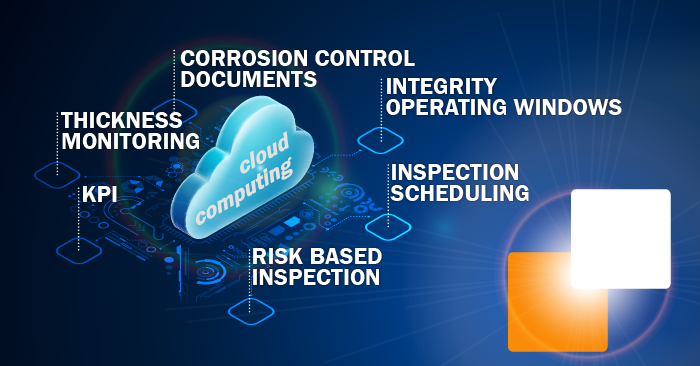
By now, the benefits of cloud computing for asset integrity management (AIM) are well known. The ability to store all asset data securely in the cloud – thereby outsourcing the complex and expensive IT support and maintenance involved in hosting it in-house – can be leveraged for tangible and immediate cost savings. However, when it comes to selecting the right software for cloud-based inspection data management, things are not quite as cut and dry.
Best Practices for Implementing a Risk Based Inspection (RBI) Program

The immediate cost saving advantages of adopting a Risk Based Inspection (RBI) approach to asset integrity management are gaining momentum. More and more corporations are realizing that RBI, with its ability to intelligently analyze equipment’s probability of failure (POF) vs consequence of failure (COF), is the more prudent approach to managing their critical assets. It assures that a structured, systematic, and technically defensible approach is used to make decisions. After all, it drastically reduces instances of equipment failure and more than halves the likelihood of unplanned shutdowns.