
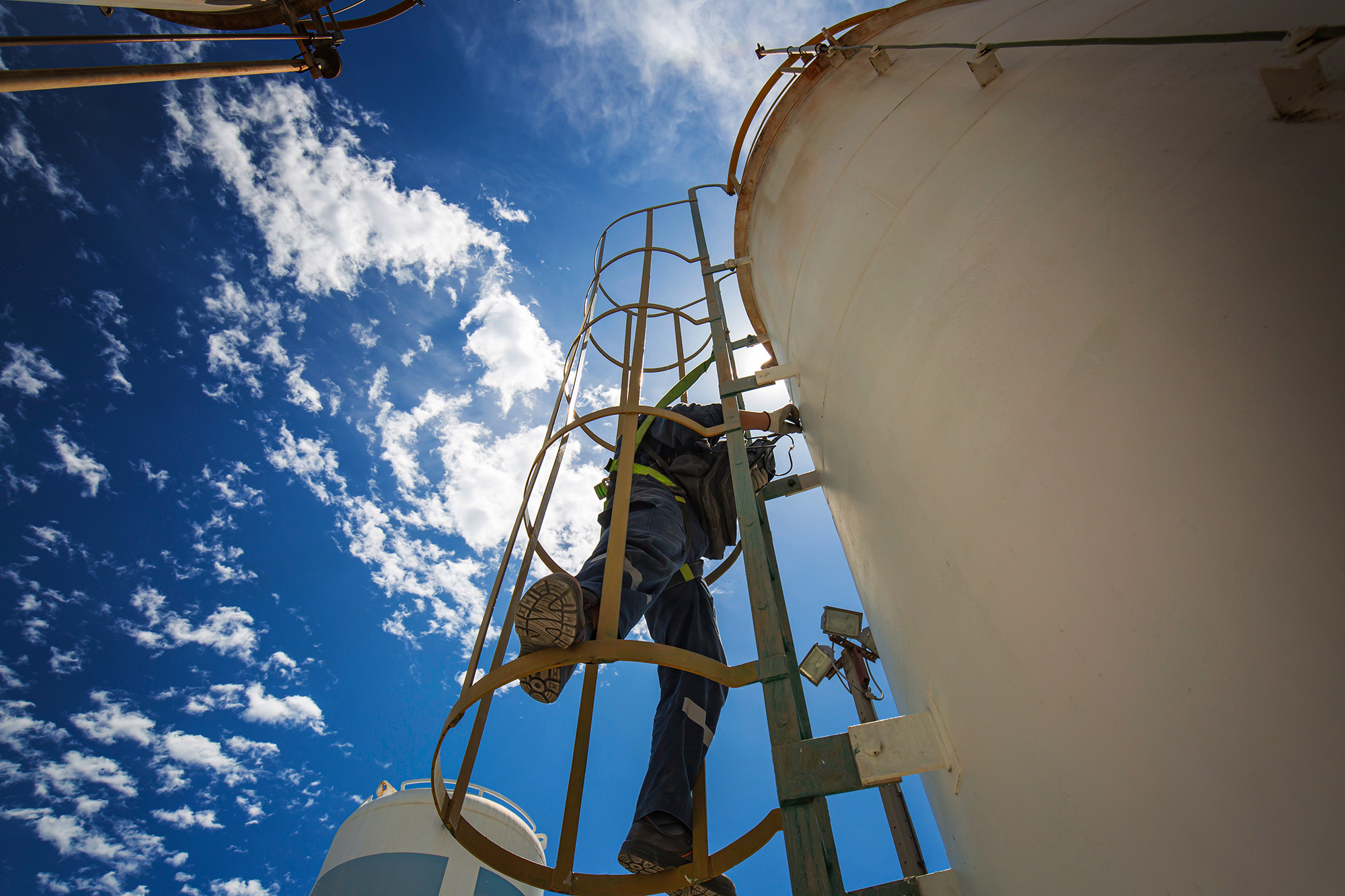
Thickness Measurements:
From Probe to Risk-Based Assessment
The journey from asset thickness measurements to Risk-Based Inspection (RBI) assessments is critical for both greenfield and brownfield facilities. Consistency in the initial stages ensures that data collection, verification, and risk identification lead to informed decisions across engineering, operations, and management objectives.
Key Steps in RBI Process
- Create and verify the asset registry, including bill of materials and process heat and material balances.
- Assign corrosion circuits based on process conditions and asset characteristics.
- Identify potential and known damage mechanisms (DMs) for each circuit.
- Conduct the RBI assessments, evaluating both probability and consequence for each identified DM.
- Develop an inspection plans, assigning Condition Monitoring Locations (CMLs) for DMs identified and corrosion rate verification.
- Collect and verify inspection results, ensuring measurement integrity.
- Reassess and adjust the inspection plans based on newly acquired data.
Assigning CMLs
The number of CMLs assigned during initial and subsequent RBI assessments are determined by the morphology of the degradation mechanism:
- Generalized DMs require fewer monitoring points.
- Variable or unpredictable DMs warrant additional CMLs to capture the full extent of degradation.
Over time, as inspection data is collected and analyzed, the number and placement of CMLs may be adjusted to reflect:
- The severity and rate of degradation
- Predictability of damage locations
- Changes in process conditions or operational history
Utilizing Corrosion Rates for the purpose of Risk assessment
When multiple CMLs are available for an asset, corrosion rates should be analyzed to ensure they:
- Accurately reflect the condition of the asset under inspection
- Have confirmed that any Integrity Operating Windows (IOWs) and measured excursions since the previous inspection have been identified and documented.
- Account for the assigned DM in the inspected area
Both short-term corrosion rates (STCR) and long-term corrosion rates (LTCR) should be derived with reasonable bounds (minimum and maximum values) to represent the asset’s expected degradation.
These corrosion rates:
- Provide inputs to corporate RBI models and corrosion control documentation
- Serve as a reference for similar assets or services that have not yet been assessed
- Support the calculation of representative corrosion rates for future assessments
Understanding Risk
Corporate risk models that utilize STCR and LTCR allow organizations to:
- Prioritize assets based on short-term and long-term risk
- Plan turnarounds and assign inspection intervals more effectively
- Ensure that overall risk remains within corporate As Low As Reasonably Practicable targets
While modeling risk is the ultimate goal, the reality of managing the thousands of data points required to feed those models presents a significant operational challenge. To bridge the gap between field data and corporate risk targets, facilities need a dedicated processing engine. When selecting an Inspection Data Management System (IDMS) to serve this role, it is critically important to choose a system capable of supporting both the initial data entry and the continuous, ongoing data management (evergreening) required to keep risk models accurate.
The system should effectively handle single and bulk upload of:
- New thickness measurements as they are collected.
- Instant calculation of both short term (STCR) and long-term corrosion rates (LTCR) associated with identified damage mechanisms (DMs)
- Dashboards or alerts to track CML inspection due dates or expiries
- Corporate risk targets, ensuring probability and consequence of failure remain within acceptable limits.
- Corrosion control documentation, maintaining a complete audit trail for compliance and decision-making.
- Integrity Operating Windows to monitor lower and upper bound of acceptable process excursions that could affect corrosion rates.
An IDMS with these capabilities ensures that thickness monitoring data remains current, supports accurate RBI assessments, and facilitates risk-informed inspection planning across the organization.
Contact us today to learn more about our comprehensive software solutions and start streamlining your asset management operations.