

The key to achieving these objectives is to ensure that proper planning has been done to address them before establishing a workflow for ongoing operations. Invest the time to assess the company’s current state: What is the current scope of assets? What are our objectives with the AIM program? What requirements must we adhere to for regulatory and environmental compliance? Once this information is obtained – what we’d call defining a Program Scope (Fig 1) – a more focused and effective workflow process can be established. In fact, skipping this step can compromise even the most well-intended AIM process and create problems down the line.
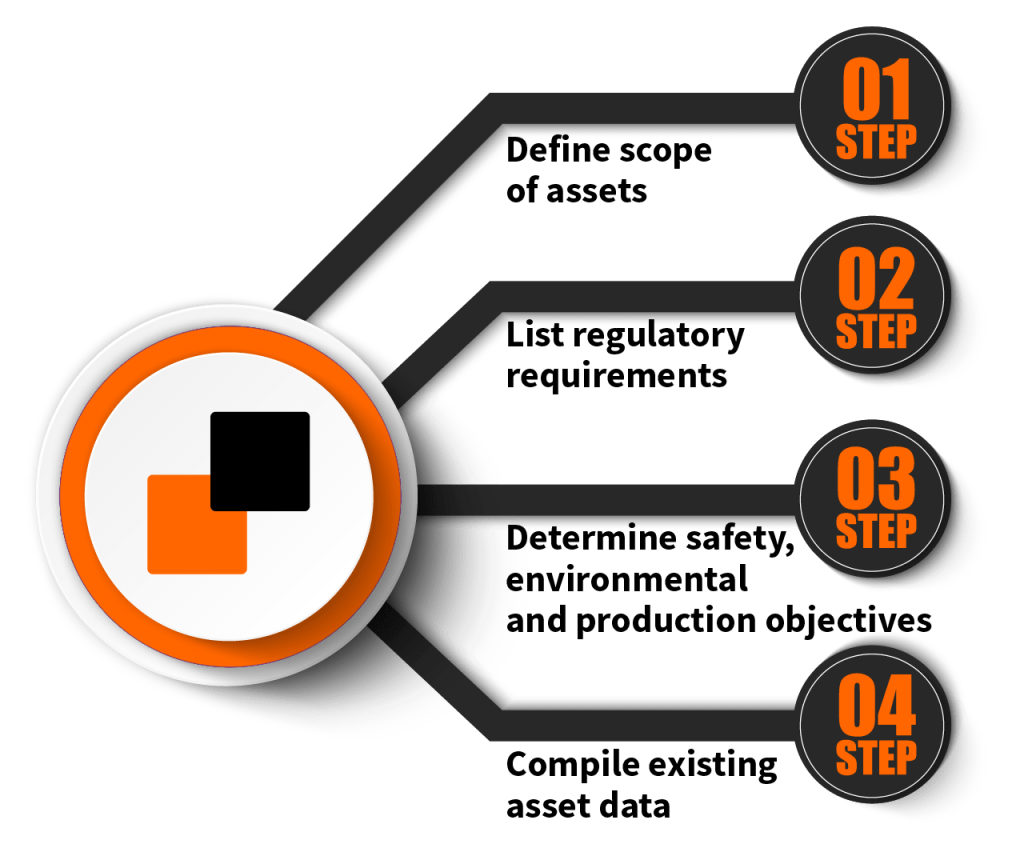
Figure 1: Program Scope
Once all of the information from this first step has been determined, the workflow process can be established. The key here is to adopt a process that operates in a loop – in other words, one that is evergreen. Some companies make the mistake of adopting a linear approach with a fixed end, where new inspection data does not result in or trigger a formal Risk Based Inspection (RBI) assessment. Instead, the data is managed by an individual inspector (or neglected altogether). This can create obvious gaps in the integrity and efficacy of the program.
In reality, all equipment should be somewhere in a continuous loop during all of its service life. The most effective workflow approach adopts six key steps.
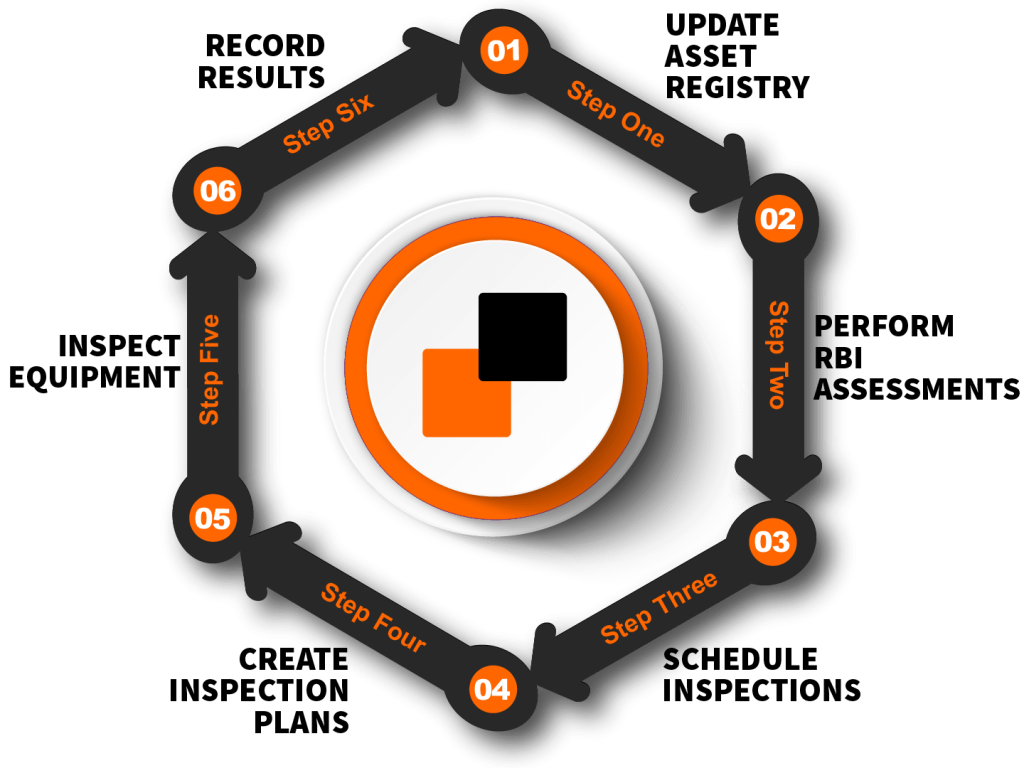
Figure 2: Work Process
Adopting this two-pronged approach to defining your AIM processes helps ensure that critical equipment is identified early. Maintaining a continuous loop for the asset’s lifecycle ensures that it is inspected per the RBI assessment schedule. This ultimately results in fewer unplanned shutdowns, extended inspection intervals (prioritizing critical equipment over non-critical according to risk), and reduced risk of catastrophic failure. In fact, utilizing the right AIM program for these purposes has been shown to reduce inspection costs by up to 30% and shutdowns by up to 50%. The benefits are tangible and ongoing for the duration of an asset’s operational lifecycle.
Common Mistakes to Avoid
The first and most critical mistake you can make to compromise the efficacy of your AIM workflow would be failing to establish the Program Scope listed in Fig 1. Other traps to avoid as you establish your workflow include: